


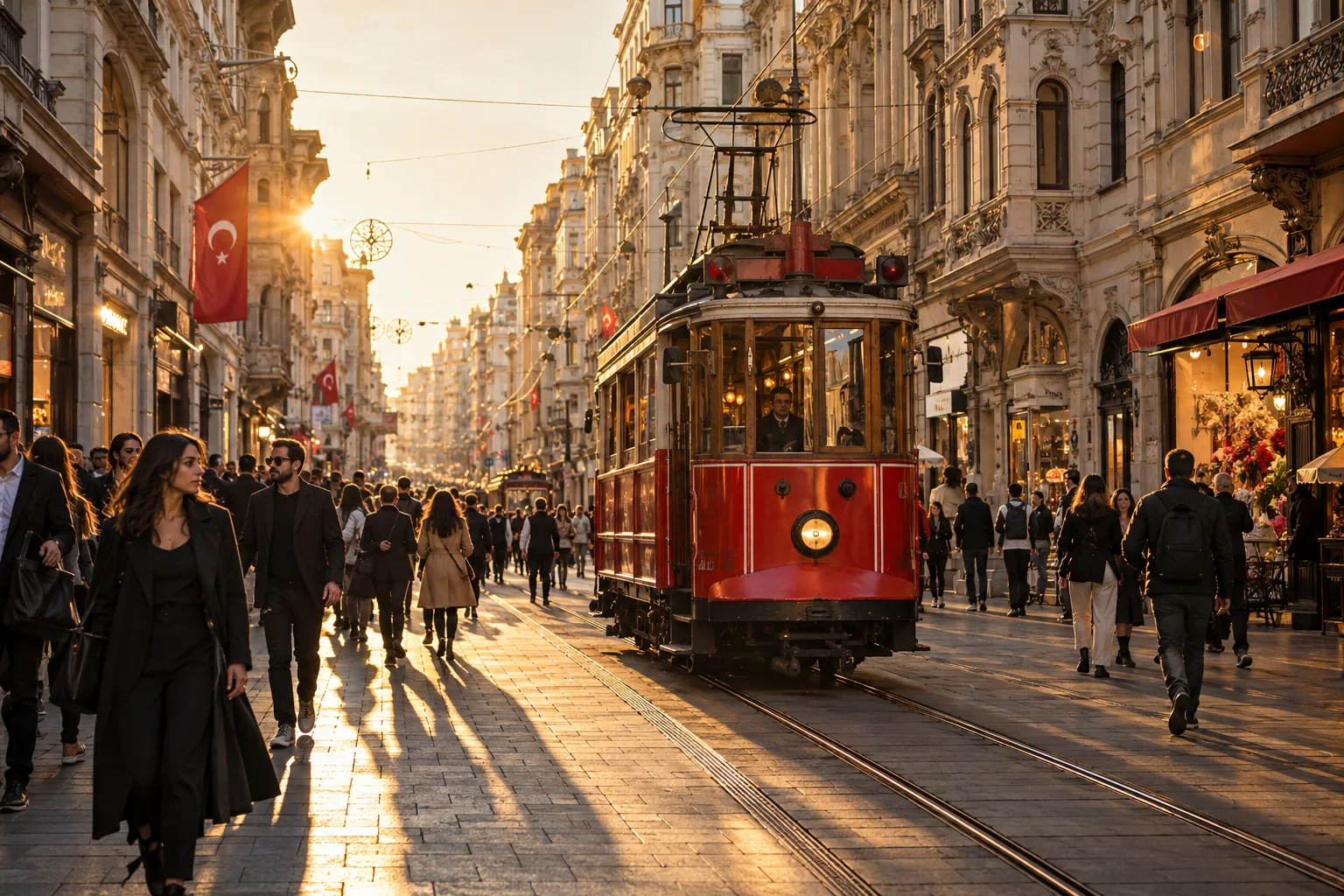
How architecture, light and movement can shape a series without overwhelming its subject.
A city offers far more than a recognisable skyline. Its light falls between buildings in a particular way; its surfaces hold traces of use, and its pace changes how people move before the camera. For a visual series, that character matters more than an image that merely proves where it was made.
Reading a place
Before choosing a setting, we ask what the images need to feel like. A quiet street may invite closeness; an open square gives a person more distance and presence. Glass, stone, shadow and water are not interchangeable scenery. They establish lines and colours that can carry through the whole series. We look first for a place that belongs to the idea, not for the most famous view.
The hour changes the story too. One building may look graphic in the morning and soft towards evening. Wind, traffic and passers-by cannot be planned completely. We account for them without trying to turn every frame into an event. Sometimes moving a few steps is enough to see the space differently.

Person and place
A good city series allows the setting to be present without swallowing the portrait. Perspective and distance make that possible. A close frame may reveal only texture, while a wider one lets architecture and movement speak. Both belong to the same story when light and posture connect them.
For branding, portrait and editorial work, place becomes part of the visual language rather than a label in the title. The strongest frames may not resemble a postcard. They hold an atmosphere in which a person or idea can belong. The city becomes a stage in the best sense: it supports without taking over.